
Moving Beyond Traditional Ping Monitoring
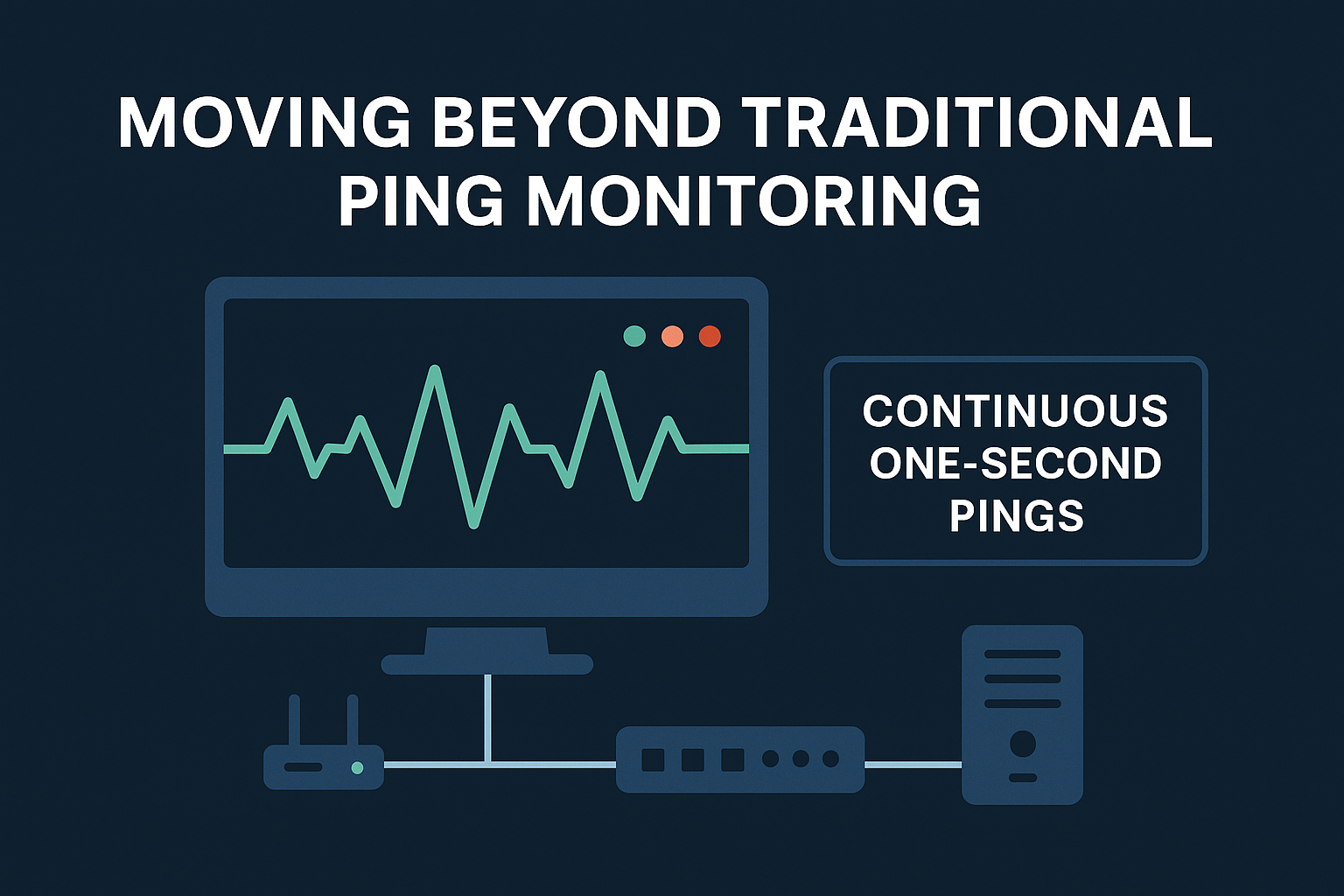
Most network monitoring systems still rely on the same old method to check device health: send a few ICMP packets, count how many come back, then wait until the next cycle, usually one to five minutes later.
It’s a decent snapshot. But snapshots aren’t monitoring.
Between those intervals, the network can experience latency spikes, jitter, or micro-bursts. All invisible. By the time the tool checks again, the moment has passed.
The Scaling Problem
These traditional ping engines also struggle at scale. When monitoring thousands of devices, they blast thousands of probes at once. That burst of ICMP traffic can overwhelm parts of the network, sometimes even creating the very packet loss alerts they’re supposed to detect.
In the end, you’re not measuring your network—you’re measuring the side-effects of your monitoring tool.
How NetSense Approaches It Differently
With the latest release, NetSense NMS has left this outdated model behind. We’ve built a new ICMP (Ping) engine from the ground up—faster, lighter, and far more flexible.
Instead of sending a handful of packets once per cycle, NetSense now runs continuous one-second pings for each monitored device and summarizes the results every minute. This steady stream of data gives a much clearer, near real-time picture of what’s actually happening on your network.
What This Means for You
- Faster insight: With one-second pings, you’ll spot network loss or latency changes almost immediately.
- More detail: Latency distribution and jitter metrics give you a richer view of network performance.
- Scales effortlessly: Even very large networks can run continuous pings without issue.
Ready Now
The best part? You don't need to do anything. The new ICMP tool is already integrated into NetSense NMS and available to all users. Your monitoring just got faster, smarter, and more powerful. Network visibility isn't a luxury—it's the foundation of reliable service delivery. With this upgrade, NetSense NMS gives you the tools to see more, respond faster, and stay ahead of issues before they impact your customers.
Frequently Asked Questions
- Why isn't traditional ping monitoring enough?
- Most tools send a few ICMP packets once every one to five minutes — a snapshot, not continuous monitoring. Between intervals, latency spikes, jitter, and micro-bursts happen invisibly, and by the next cycle the event has passed, so you miss the performance problems customers actually feel.
- How does high-frequency ping monitoring scale without harming the network?
- Legacy engines blast thousands of probes at once, and that ICMP burst can itself create the packet loss it's meant to detect. A continuous one-second ping per device, summarized every minute, spreads the load into a steady stream so even very large networks get near-real-time data without self-inflicted congestion.
- What extra insight do one-second pings give you?
- They surface loss and latency changes almost immediately instead of minutes later, and the per-minute summaries add latency distribution and jitter metrics — a far richer view than a simple reachable/unreachable check. You can detect micro spikes in packet loss or jitter. Those can be the reason for gaming issues, voip issues, etc.