
Linux Server Monitoring. CPU to Syslog, All in One Place.
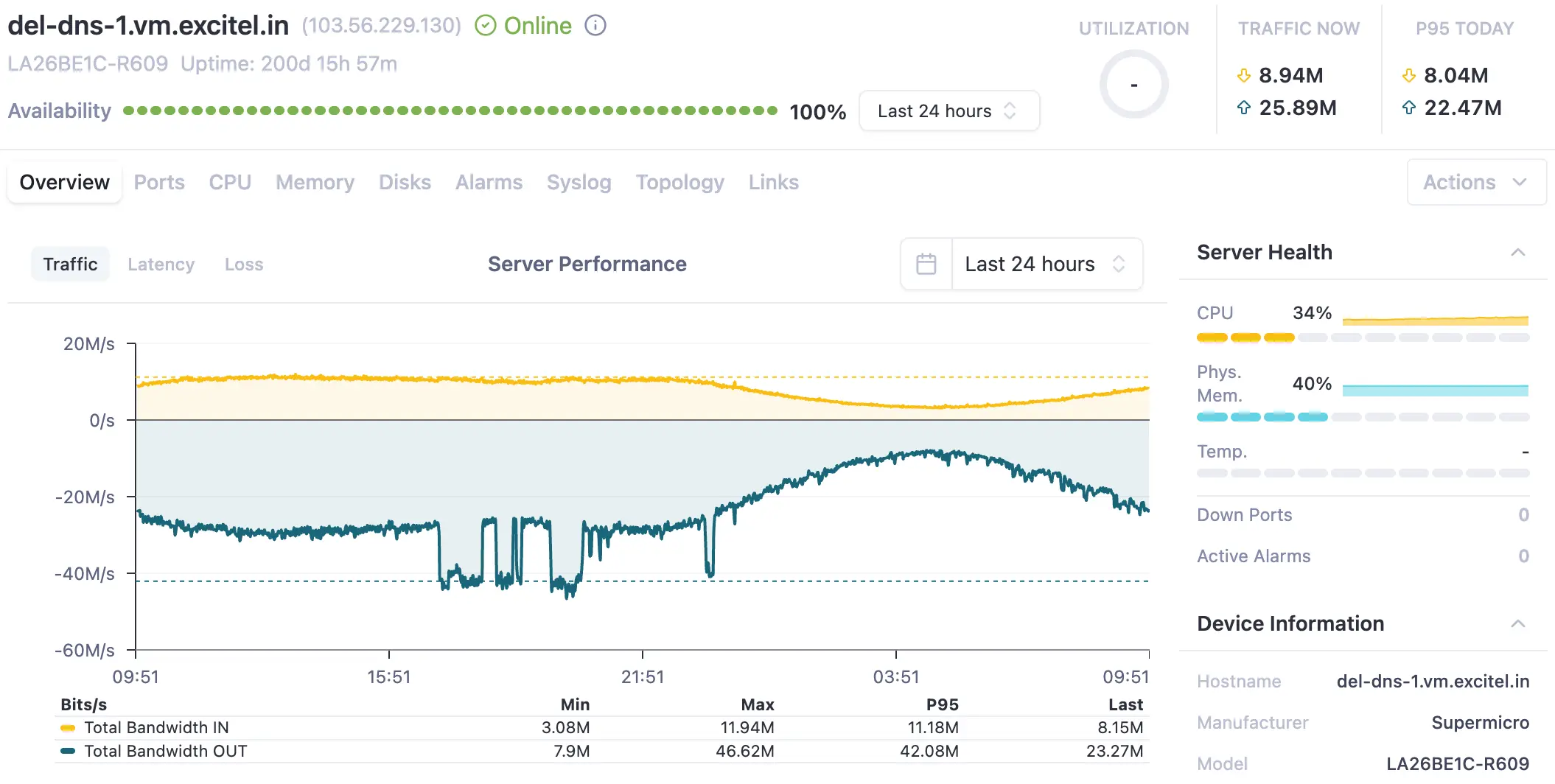
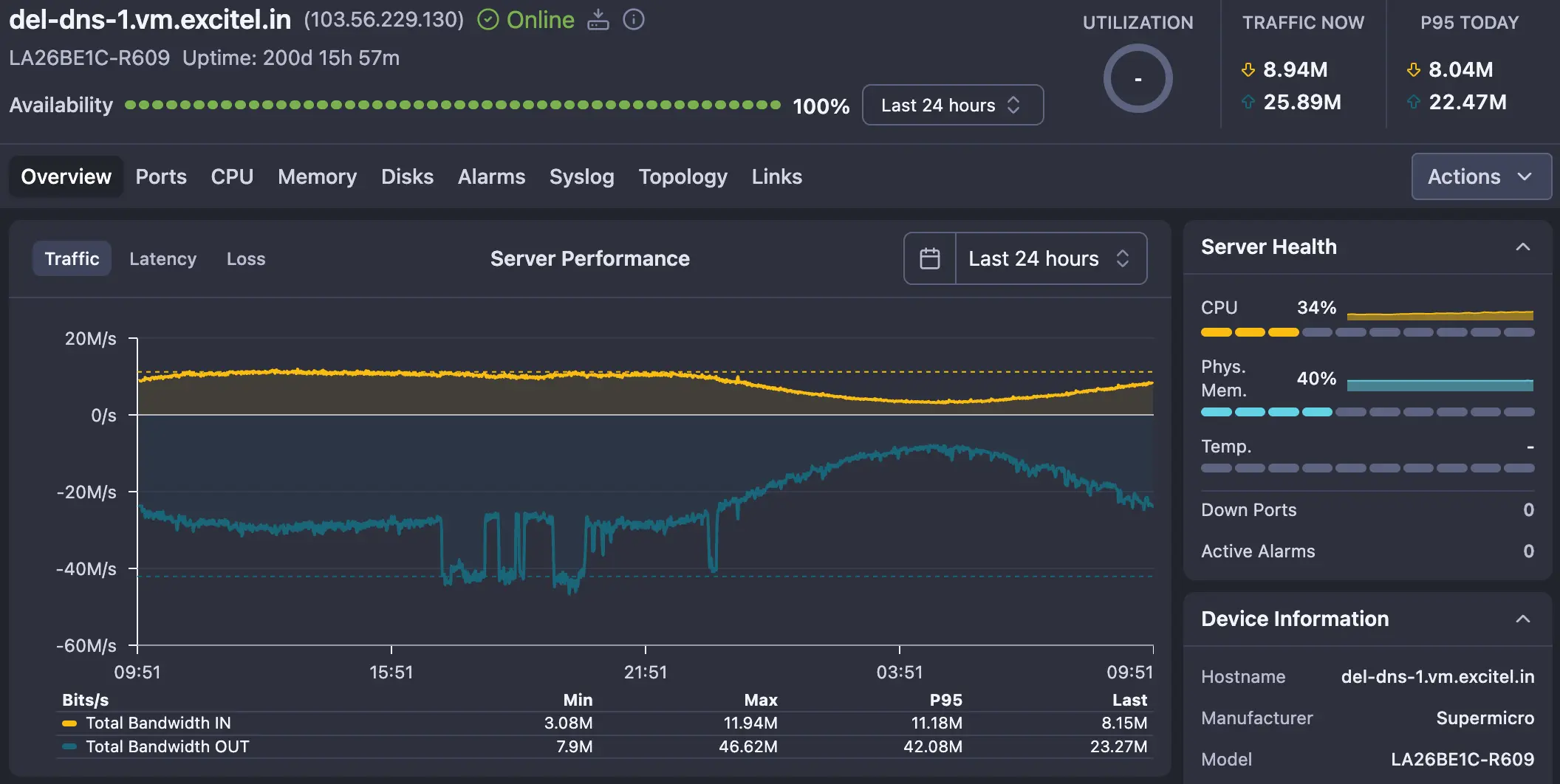
Server Monitoring Capabilities
NetSense polls your Linux servers over SNMP — no proprietary agent required. Capture host vitals, every mounted disk, and every network interface alongside the rest of your infrastructure.
Host Vitals
- CPU — Average and Per-Core
Track aggregate CPU load and drill into individual cores to catch single-threaded bottlenecks.
- Memory — Physical and Virtual
Monitor RAM usage and swap activity to spot memory pressure before processes get killed.
- Temperature
Read on-board thermal sensors and get alerted before heat triggers throttling or a reboot.
- Uptime & Availability
Continuous availability tracking with an at-a-glance 100% / down history for the last 24 hours.
- Device Information
Auto-detect hostname, manufacturer, model, and IP for asset tracking inside the same UI.
Storage & Network
- Disks — All Mount Points
Every mounted filesystem found on the server is monitored for space, inodes, and growth trends.
- Network — All Interfaces
Per-interface traffic (in/out), errors, and discards with utilization charts and P95 calculations.
- Bandwidth & P95
Server Performance graph with Traffic, Latency, and Loss views — plus billable P95 today.
- Syslog
Forward syslog from the server to NetSense and correlate events with metric spikes in one timeline.
- Alerts on Every Parameter
Threshold and rate-of-change alerts on CPU, memory, temperature, disks, interfaces, and syslog.
Server Monitoring Features
Unified Dashboard
CPU Insights
Memory Monitoring
Disk Coverage
Interface Traffic
Temperature Sensors
Syslog Capture
Alerts Everywhere
Can I...? YES!
With NetSense Server Monitoring, the answer is always YES! Here's what you can do with our platform.
Can I monitor Linux servers in the same dashboard as my OLTs and switches? YES!
Can I track CPU load per individual core? YES!
Can I see physical and virtual memory usage with history? YES!
Can I monitor every mount point automatically? YES!
Can I track traffic and errors on every network interface? YES!
Can I read CPU and chassis temperatures? YES!
Can I capture syslog from each server? YES!
Can I get alerted on any metric — CPU, memory, disk, temp, interface? YES!
Can I see P95 bandwidth today for each server? YES!
Can I track 24-hour availability with a visual history? YES!
Can I monitor Supermicro, Dell, HPE, and generic x86 hosts? YES!
Can I monitor without installing a proprietary agent? YES!
Server Monitoring FAQ
Common questions about Linux server monitoring.
One Dashboard for Network and Servers
Book a live demo and see your Linux hosts side by side with your OLTs, switches, and BNGs — same alerts, same maps, same UX.